
In this blog, I will focus on the difference between IVF and sterilisation reversal and why you might have one or the other if you have undergone sterilisation but wish for another baby.
I’ve had a Sterilisation, but want another baby – what are my options?
If you have been sterilised, your fallopian tubes may have been cut or tied or you may have had a clip put on them. This stops the egg getting up the tube to meet the sperm, thereby preventing a pregnancy occurring.
If you wish to get pregnant after having this done (for example if you change your mind and your family is not complete, or you meet a new partner) the options are to have the sterilisation reversed or to undergo IVF.
What is Sterilisation Reversal?

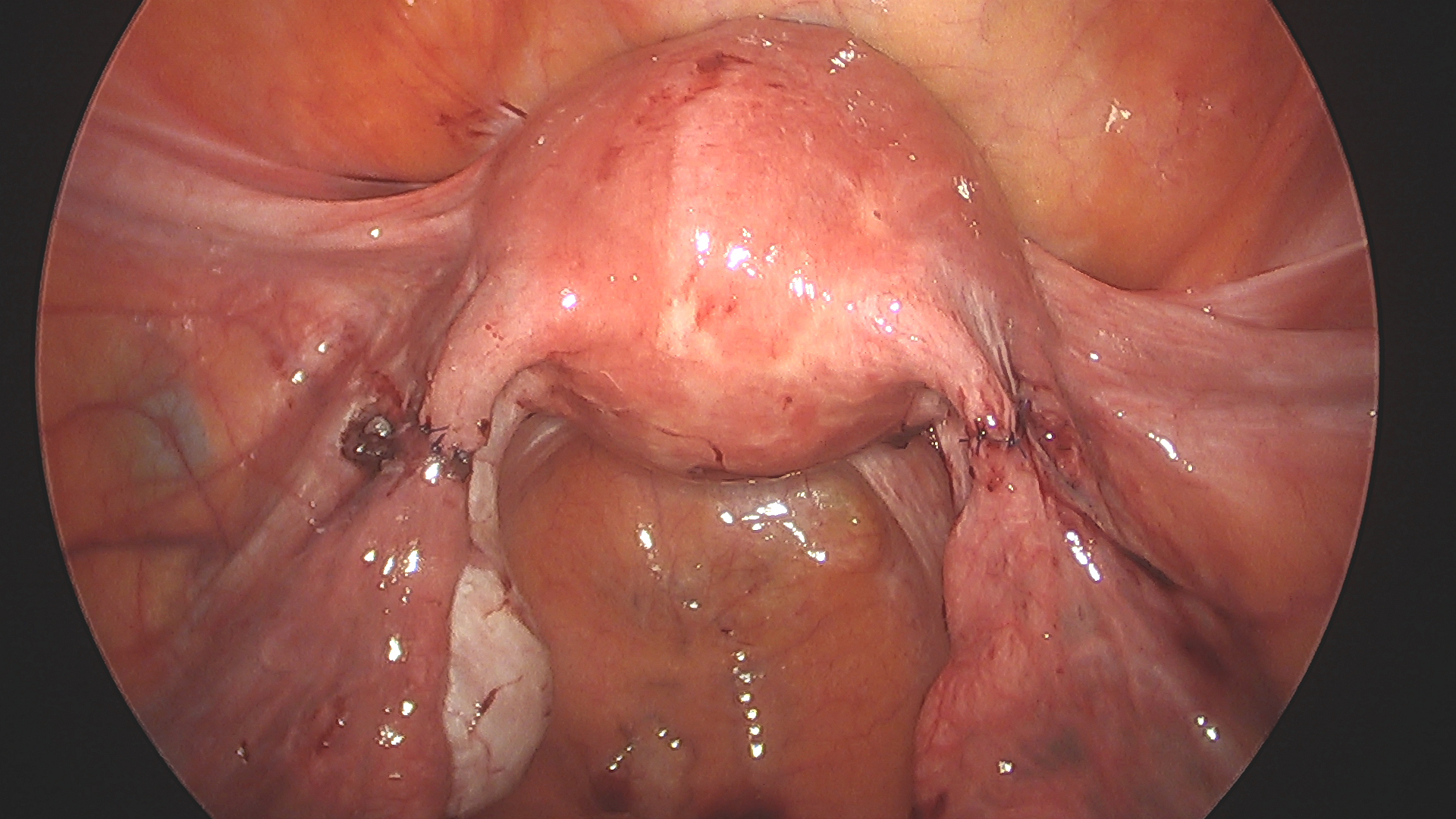
Sterilisation Reversal (keyhole)
Sterilisation reversal basically means taking the clip off the tube, or cutting away any scar tissue and then putting the tubes back together with tiny stitches (microsurgical sutures). The aim is that this heals with an open tube which allows the sperm and the egg to meet again.
What if I do not wish to undergo Sterilisation Reversal?
Another option, if you’ve been sterilised but wish for another baby, is IVF, which overcomes the need for the tubes to be open.
In IVF, the eggs are retrieved directly out of the ovaries. These are then fertilised with sperm in the lab, which then develops into your embryos. The embryo is then transferred back into the womb to implant and grow.
Should I Choose a Reversal or IVF?
Cost efficacy:
There’s really good evidence that if you’ve been sterilised, having a reversal is more cost effective than doing IVF. Sterilisation reversal costs (in Jan 2026, at time of writing) around £6,000 whereas a typical IVF cycle could quite easily cost £8-10,000.
Success rates:
In both scenarios, success depends on the woman’s age (as well as other factors). However, the average success rate for IVF is 35% and the average success rate for a sterilisation reversal in my clinic, for example, is about 65%.
So, sterilisation reversal is more cost effective and has higher success rates, than IVF.
The other benefit to sterilisation reversal is that once you’ve had it done, if you wished two further babies, or if you have a miscarriage, you can try again, naturally, without having to have any more treatment.
Whereas with IVF, if you have a miscarriage or want a second baby, you have to pay for another IVF cycle or a frozen embryo cycle.
In summary, though of course individual suitability, success rates and costs will vary, in general, sterilisation reversal is more cost effective and has higher pregnancy success rates than IVF after sterilisation.
As always, please do not hesitate to get in touch should you require any help or advice.






Leave A Comment